
I don’t think I’ve ever had a stable home. I didn’t grow up with my mother and I never met my dad. I was raised by my aunt starting at the age of one, but she started to have mental health issues, lost her job, and pulled me out of school. I often had to take care of myself.
I had a lot of depression and suicidal ideation at 10. I was really sad and felt really hopeless at that point.
When I was 21, I became street homeless.
When you’re street homeless, you spend most of your time figuring out your schedule. A typical day would start at 6 A.M. when I am woken up to leave the overnight shelter I slept at the night before. At most of those shelters you’re only allowed to sleep on foldout chairs, not on a mattress or even on the floor. But it’s still better than being on a sidewalk.
With a whole day to fill I usually go to different drop-in spaces across the city like Safe Horizon’s Streetwork Project. When I first became homeless, 311 connected me to Safe Horizon and that same day I was able to access a bed and basic necessities. I was paired with a case manager who helped with my needs like therapy, access to food, transportation, and navigating housing and school.
But on the weekends, most drop-in centers are closed so I have to find more ways to kill time. I spend a lot of my time on transit, with my headphones on and my music playing as a coping mechanism.
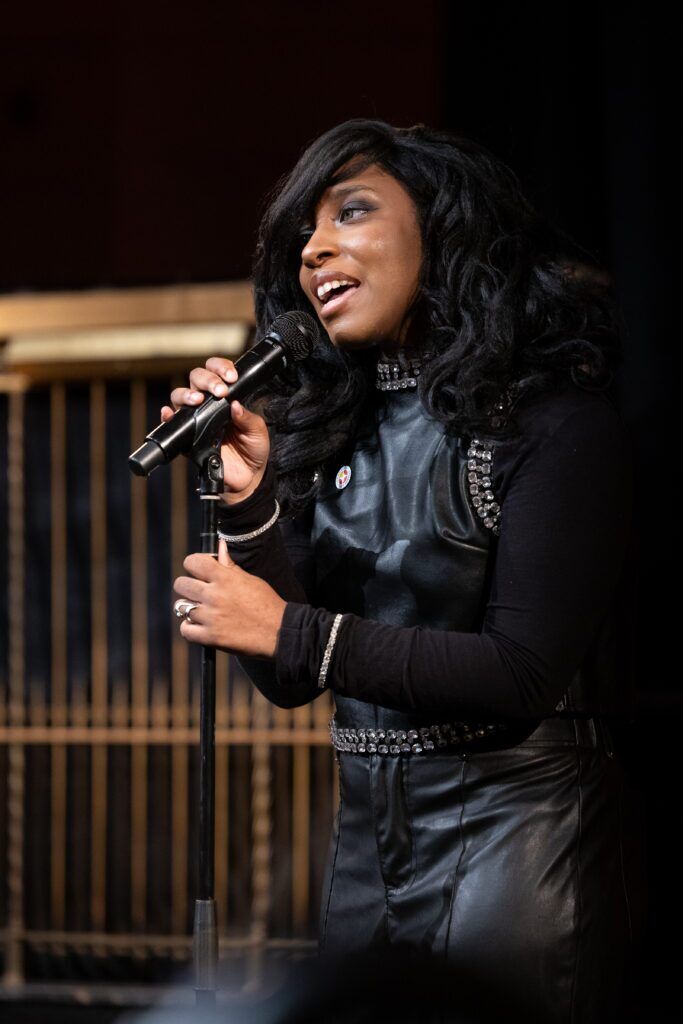
Music brings me joy—I love writing, producing, and singing it. Sometimes I’ll go in a bathroom at a drop-in center to record a track on my phone, or there are affordable hourly recording spaces where I’ve gone too. A lot of homeless people are really talented, they just don’t have the means or funds to do something with it.
When I turned 22, I got my GED, but was still struggling to find a job. Each time I get a year older, I lose services. It’s a race against aging out of everything—and trying to be as stable as I can be before that happens because drop-in centers only serve youth up to age 24.
I would stay up to 2 A.M. in the morning applying for jobs in retail and hospitality, getting so many interviews, making it to second and third-round and group interviews, but still nothing. For more than year, I survived off $200 a month from part-time work.
Finally, I got a job at Trader Joe’s after a year-and-a-half of looking. A couple thousand people applied and I was one of five people who got hired—it was such a relief. But at the end of the day, I’m only a young adult minimum wage worker who financially supports herself. No one can afford anything today so I know it’s not just us, but we’re at the bottom of the pyramid.
I’m hopeful for the future now that I’ve been working with Streetwork for three years. They’ve slowly helped me build back the blocks of my life. Now that I have more access to stable housing, I’m hoping to go to college to study music production and fashion business.
I’m sharing my story to bring awareness to people who’ve never been through this, but also for anyone who is currently going through it. There’s a lot of us, but homelessness doesn’t define me. People get stuck on that part that they don’t see anything else, but maybe you can see a little more now.